Early alerts for at-risk customers
When activity drops, the owner hears before a cancellation
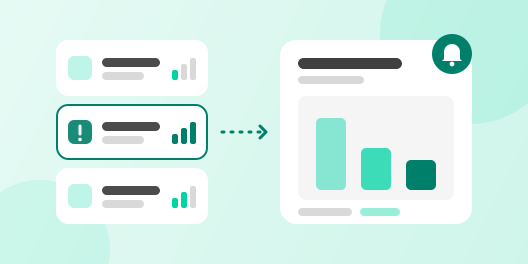
A subscription and maintenance business that earns most of its revenue from existing customers set up a flow that reads each customer’s inquiries, meetings, recent activity, owner changes and renewal date every week by the same rules, records churn risk on the customer record, and reaches out to at-risk customers first.
The problem
- 01
Churn arrives as a cancellation email
The team learned how a customer felt only once the cancellation email came in, with no time left to act before renewal.
- 02
Every owner reads health differently
The same customer looked fine to one owner and risky to another, so nobody could agree on which accounts to look after first.
- 03
Context is lost at handover
When an account changed hands, what the customer had complained about stayed in chat threads and people’s heads, and the new owner started from scratch.
How Trackit solves it
- 1
Set the risk rules and the day once
The CS lead sets a recurring schedule trigger for 8 a.m. every Monday and writes the rules that separate risk levels into the agent instructions: whether inquiries are rising, whether meetings have stopped, when the last contact was, and how close renewal is. A small companion workflow leaves a note with the date and previous owner whenever an account changes hands. That is all a person does.
- 2
An agent reads each account and decides risk and reason
A find-records block gathers the companies on an active subscription, and a custom agent reads each one’s inquiry and meeting interactions, notes, tasks and renewal date. It answers with a risk level (low, medium, high) and a one-line reason by the rules you set. The agent only reads and never changes data itself.
- 3
Risk lands on the customer record, and the follow-up goes to the owner
An update-record block writes the risk level and reason fields on the company record. For high-risk accounts only, a create-task block gives the owner a call-before-renewal task, and the owner gets a notification. A dashboard reads the same fields to show customers by risk level, and the risk and reason stay on the record even when the owner changes.
- TriggerRecurring scheduleStarts every Monday at 8 a.m.
- ActionFind recordsGathers every company on an active subscription.
- AICustom agentReads each account’s records and sets risk and reason.
- ResultUpdate recordSaves the risk level and reason to the company record.
- ResultCreate taskGives the owner a follow-up task when risk is high.

What changed
Before Trackit
With Trackit
More use cases
 Subscription and rental
Renewal sales 90 days before expiry
For every contract, a renewal deal and a follow-up task appear 90 days before it ends, and the owner is reminded again at 30 days.
 Sales teams that manage many contracts
Contract terms read from the document
AI reads contract PDFs and scans, fills in the term, amount and renewal conditions, and links the contract to the customer.
 CS team with heavy inquiry volume
Claim records from customer photos
AI reads product and on-site photos sent through a web form, fills in the claim record and links it to the customer and an owner.